Tuesday, October 19, 2021

Side by Side: The Great Clubhouse Dynamic

Yaniz, Mairi


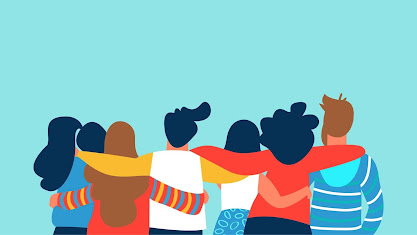
Working side by side is a central aspect of the Clubhouse model that unwinds people’s internal stigma about mental illness. The author Andy Wilson describes his experience from when he first started working as a staff for a Clubhouse to when he realized the importance of his supervisor’s advice to be a part of the Work Ordered Day and build relationships. Andy quickly learned that no amount of academic or work experience could prepare him for the unique environment of the Clubhouse, where members and staff work as colleagues. There is no playbook or training on how to build relationships with members, nor is it something intentional or that can be rushed. As Wilson put it, “you just get to know each other.” When people work together over time they build relationships.
Andy relates, “so this occurred to me, is why we work at the Clubhouse. Instead of talking about, and thinking about, and journaling about, and meditating about how we get better from our illness: we just are better. We contribute, we share our skills, we are needed, we are thanked; and it changes the way we think about ourselves.  I didn’t have to do anything- just work side by side the people.”
 

Yaniz Experience

This article resonates with my experience of starting out at the Clubhouse where my academic and work experience could not have prepared me for how the Work Ordered Day and relationship with members would change me. Before starting work at the Clubhouse, I experienced a lot of self doubt where I felt underqualified for such an important position. I was worried about whether I would be able to make meaningful contributions to the unit and create genuine relationships with members, while coping with my own mental health conditions and personal biases about mental illnesses. I expressed these feelings to my supervisor and they shocked me with their answer: You don’t have anything to prove that you’re competent for the position, just focus on building genuine relationships.
As a young, fresh faced, inexperienced college graduate I was faced with the challenge of not only learning about the Clubhouse model, but becoming one with the Clubhouse model. Once I started working side by side with members, I soon realized how relationships and community are at the core of everything we do at the Clubhouse. I didn’t have to worry about constantly producing outcomes and proving myself to be competent, I just had to be myself.
Working at the Clubhouse has helped me grow as a person and as a facilitator and members give me purpose by making my work valuable and meaningful each day, as we work side by side.
 

Mairi Experience

I joined soon after Yaniz started working at the Clubhouse. I was surprised by the Work Ordered Day and the idea of working side by side with staff. I had always had to prove I was improving and meet staff expectations of what I was supposed to be getting done at other programs. Here at the Clubhouse, I was treated like an equal. There were no expectations or pressure, I just had to come as myself to the clubhouse.
I started building relationships with staff and members alike, as I worked side by side with them. It came naturally. I didn’t just form a colleague relationship, I formed a friendship with Yaniz.  At one point I was going through a tough time. I was able to open up to her and get the support I needed to be able to continue to participate in the Work Ordered Day.
The side by side relationship has helped me with my self confidence, self esteem, and has empowered me to take lead in Clubhouse activities.
 

Conclusion

We would like to conclude the blog post with some profound quotes from Andy Wilson’s article:
“Members and staff working side by side with people build a real community of hope and opportunity.”
“The core of the Clubhouse model is that people with and without mental illness can work together to build a different kind of community; a community in which we don’t fix each other or even provide ‘services’ for each other. A community in which there is real hope, real dignity, real need, real opportunity; and in this kind of community people get better.”
“The side by side nature of the Clubhouse; the mutual need, shared responsibility, genuine respect- this is what makes relationships transcend the mundane and become the fertile ground for this kind of community.”
And this is the Clubhouse way: side by side.

Tuesday, October 12, 2021

Clubhouse Community

Mairi, Yaniz


Clubhouses are based on a strong sense of community. But what makes a clubhouse a community? Robby Vorspan of Fountain House, the original clubhouse in New York City, wrote an article about this.
Vorspan recalled one of the first executive directors, John Beard, who wanted the clubhouse to be based on acceptance, inclusion, and appreciation of what each member could do. A community is where everyone is involved in the work ordered day. There were not meant to be “insiders” or “outsiders”. A community is where everyone is equal.
Vorspan gives some examples of destructive practices such as setting hierarchies, committees, power structures, and exclusive policies delineating who has greater power than someone else. Some examples include voting on who is allowed to join based on the personal criteria of the members, committees deciding who gets to participate in TE opportunities, and disciplinary policies designating acceptable and unacceptable behaviors. These structures and organizations may work for big companies, the government, and even churches, but for the clubhouse it is destructive in nature.
“When some members are placed in power and authority to make critical decisions over others, it automatically casts other members as the ones who are being judged and assessed as worthy enough or not.”
“Creating any kind of formalized system in the clubhouse that asks members to pass judgements upon one another eats away at the roots of one of the most fundamental values of the clubhouse community.”
The Standards tells us that anyone with a mental health illness should be welcome in the clubhouse. An open and welcoming environment for those with mental health illnesses embodies Beard’s vision of a clubhouse where its members gain a sense of belonging and value. Creating an inclusive community is not an option, it is a central mission of the clubhouse. Unconditional acceptance is a basic tenet of clubhouse membership.
To create and sustain a restorative community a clubhouse needs to be vigilant about this equality.
It is up to us, as a clubhouse and people, to build communities that invite, welcome, and heal, and not clubhouses that assess, judge, and exclude. If we fail to do so, none of the opportunities we offer, offer any real opportunities at all.
Reference:
What makes a Clubhouse Communities True Clubhouse Communities?
By Robby Vorspan, ICCD
13IS Plenary Session 

http://clubhouse-intl.org/documents/vorspan_eng.pdf 

Tuesday, October 5, 2021

Un-Labeling Emotions as ‘Good’ or ‘Bad’

Yaniz, Mairi, Becky
 

The emotions we label as negative are actually neither good nor bad; they are a part of life and being a human with a full range of emotions. According to Tracy Kennedy:
“We need to provide a space to allow that life is going to be difficult, challenging and incredibly hard sometimes, which leads to uncomfortable or negative emotions. We need to learn to acknowledge, embrace, and understand what those emotions are trying to tell us. We need to learn the power and value of these emotions.”
What we consider as negative emotions is typically those emotions that make us feel badly or uncomfortable. Negative emotions are a part of a spectrum of feelings such as those found in the wheel of emotions created by Dr. Plutchik. 

The wheel shows degrees and relationships among these emotions.

While negative emotions feel bad, there are reasons why they are not all that bad because they help us realize when we need to make changes in our lives. Tracy Kennedy describes 7 reasons why negative emotions aren’t all that negative:

Negative emotions are a natural and unavoidable part of life as they help us cope with many everyday situations and challenges. Negative emotions act as a warning sign that something is not working for us and they help us identify areas in our life that need improvement.
“Negative emotions create a fire in your belly- they motivate you to be productive, solve problems, stand up for what you believe in, gain back your personal power and make changes that propel you- or maybe even society- in a different direction.”


For humans to live wholeheartedly we have to express our full range of emotions. Hiding or ignoring our emotions can lead to physical and emotional consequences whereas feeling our emotions allows us to release the feeling and move forward.


When we allow the feelings to arise and persist, they will pass. Grasping, clinging and pushing them down will always lead to unhappiness. By allowing yourself to feel everything you need to feel, you learn how to cope and build your toolbox of coping strategies. Learning effective coping skills allows you to feel stronger and more capable to deal with emotions in the future.
Experiencing some level of negative emotions is normal but when they become ongoing or excessive these emotions can be a signal that something much deeper needs to be addressed. We must feel the emotions. Listen to them. Acknowledge, honor, accept them. Seek to understand what they are trying to tell us, so we can harness them to live our best lives.

References:
Kennedy T. (2021). Why Negative Emotions Aren’t Bad (And How to Handle Them). Life Hack. https://www.lifehack.org/articles/communication/how-handle-negative-emotions.html


Tuesday, September 14, 2021

Employment Programs at B’More Clubhouse

Jennifer, Robert, Nikita, Raymond, Becky, Phil, Jason, Ben, Mairi

The career development unit is an important part of the Clubhouse. The purpose of this unit is to help members feel comfortable and supported going back to work in spite of barriers related to mental illness.

One of the many tasks that is coordinated by the Career Development Unit is facilitating Job Hour, a weekly support for members looking for a job or already working in a job. It takes place every Tuesday at 2:15 PM. We also work on members’ individual housing, community resources and educational needs and goals.

Members get support based on where their current needs are. To cater to this, we have three different types of employment programs. The first type is our Transitional Employment (TE) program. We have partnership with various employers in the city for this. The clubhouse supports the employer by helping with hiring and training. In return, members get an opportunity to work in an entry level position for 6-9 months and build experience to kick start their career. A clubhouse representative also fills in for the member’s shift in case of any absence. Some of the TE partnerships we have are Eddie’s at Mt. Vernon, American Psychiatric Group, Regency Centers at Southside Marketplace.

Jennifer shares about the benefits of TE. She recalls, “Transitional Employment helps you get back to the workforce. Usually there is a placement manager for the position. They will go with you for your training. You get to put your feet into the world of employment. We are collecting resumes and interviewing so employers don’t have to worry about that.”  One of the members who benefited from our TE program is who worked in the Group TE position at Southside Marketplace. He recalls, “ I was guided through each step during the TE and that was very helpful. I started the journey working with Clara”.

The second type of employment program is Supported Employment (SE). For this, the Clubhouse assists members during the application and creates a working relationship with the employer.  After that, the Clubhouse maintains a relationship with the employer and provides support with communication or tasks for members. Some SE partners we have are Planet Fitness, Ministry of Brewing, Blue Rock Studios, Second Presbyterian Church, The Shining Company etc.

The third type is Independent Employment in which we help members apply for jobs on their own with tasks such as creating a resume and job application, mock interviews, searching for jobs online etc. We have a partnership with our neighbors at Charmed. Danae, one of the owners, holds individual mock interviews for this. Robert has an IE at Shannon Saloon and he shares, “Coming to the Clubhouse inspired me to apply for a job. I have been working for about a year now and that has helped me in gaining back my financial independence.”

We also have an ongoing partnership with employment support organizations in the State such as Division of Rehabilitation Services (DORS) and Maryland Employment Network (MEN). We partner with the Maryland Employment Network to help our members enroll in the Federal Ticket to Work Program, where members who are interested in working off of their benefits have access to support, including a professional benefits counselor. This also has, as well as expedited reinstatement of their benefits should they experience a relapse or other hardships in the future.

DORS provides pre-job placement services; resume, cover letter and interview prep. DORS provides members $200 to spend on clothing for job related purposes, along with providing hearing assessments and $255 for mobility tickets. They also provide benefits counseling.

Participating in the tasks of the Career Development Unit provides members the opportunity to work on their recovery in a supportive environment and also their individual career goals. We hope to continue with our work and make the unit even better with teamwork.


Friday, August 27, 2021

Relationships at the Clubhouse

Kenna, Mary, Ben, Nikita, Becky

Relationships between members and staff play an important role in the work order day. Members and staff work together as colleagues to carry out various tasks. The role of the staff lies in engaging members and that comes with good relationships. While working together, everyone gets an opportunity to have meaningful conversations and work on individual goals and projects.

Relationships at the Clubhouse are different for everyone. Kenna and Mary have shared their take on this unique aspect of the Clubhouse.

Kenna shares, “The Clubhouse provides a platform for members and staff to develop and maintain meaningful relationships in a professional setting while being a part of the work ordered day. Members are able to share very personal experiences and also get advice. Members have found advice about relationships, expectations, respect, and self-esteem to move forward with their individual goals. In addition to that, members also get to improve their social skills as well as how to grow while working in a group. It is a place where they get an opportunity to build trust and compassion to promote a feeling of worthiness. Members feel connected to humanity in ways that were not available before. This access to society and opportunities has given confidence that stretches beyond the Clubhouse walls. Lack of judgement and Freedom has led to life changing and empowering decision making. The relationships made in the clubhouse are invaluable and have given members the opportunity to find a sense of grounding, self, and community. Using personal stories of wins and losses to influence and motivate each other. At the clubhouse each day, each relationship, each experience is changing members for the better. Members are letting their lights shine, spreading that glow within the clubhouse and beyond.  

Mary finds relationships with Clubhouse members and staff to be very supportive. “I felt very loved after my husband’s passing. I love everyone else equally and have been overwhelmed and speechless by the support that I have received.”

Daniel has been a member of the Clubhouse for about two years. He shares, " The relationships I have formed have helped me improve my communication skills. When I am down, it helps me to focus on tasks and that has been a positive life skill. Members and staff together make the Clubhouse a big community in Baltimore City supporting each other and I get a lot out of the individual relationships I have within this community. Keena agrees with that and states, "This place advertises great productive lives that are beneficial to our communication skills."

For Nikita,” the Clubhouse is a place where I can be myself. I am able to bring out my goofy personality and also express honestly when I make a mistake. This gives me an opportunity to be able to relate with everyone and also work harder to make the day vibrant.”
 

Our members and staff have a different background and story. By being vulnerable, authentic and participating actively in the work ordered day, they get an opportunity to express themselves, gain insights and also achieve their goals and grow in different areas of their lives. The stories might be different but the impact Clubhouse relationships has on members and staff remains the same. 


Wednesday, July 21, 2021

Social Events Revitalize B’More Clubhouse

by Raymond Nichols

After taking a hiatus during the pandemic, we finally brought back our social events starting in July.  First, was a celebration dinner! We dressed up to the nines, danced our hearts out, ate pizza to our heart’s content and Morgan did a toast as well. It was so fantastic to even have social events again with our Clubhouse family. We had a ton of fun. There was a feeling of warmth and positive energy all around. To be able to take part in the festivities filled me with a lot of happiness and joy.


We have organized a variety of social events through the years. Some of the best ones that I recall were an Ice Cream social in the Inner Harbor, a trip to the National Aquarium, a game night at the Bun Shop, arts and crafts night not to be outdone by our epic celebrations’ dinners.


During the pandemic, we would go for a weekly picnic in Federal Hill once a week. It was a safe and socially-distant way to socialize during stressful and uncertain times. 


Personally, I am looking forward to a few social events coming up in the next few weeks. The first one is a bingo night with prizes.  Additionally, in August, we will be having a Watermelon Party while watching a summer themed movie. I think it’s going to be a lot of fun. 


In the future, a social event I would like to be a part of is duckpin bowling. That would be exciting and fun to do with the group!


Social events are an integral part of B’More Clubhouse. They provide members and staff with an opportunity to interact and add some fun into their lives. At the Clubhouse, we are busy during the day with a lot of tasks and projects. Having a designated time during the evening at least once a week is a good way to slow down, relax, and enjoy each other's company outside the workday.


Thursday, July 1, 2021

Sharing Stories for Pride Month

We celebrate June as Pride Month. The month is used to recognize the experiences of LGBTQ+ folks in the community and also support them in expressing their pride. 


To end Pride month, we wanted to share stories of members who identify as part of the LGBTQ+ community. We raise our flag up high and get members to be open about who they are.

Leroy

Personal pronoun: he/him

“I came out at the age of 13. I was bullied because of my sexual preference and have been called names. It was really difficult at first and it affected my self esteem. Fortunately I have had a really good group of female friends who have supported me. Pride to me means happiness and excitement about who I am. It can be difficult, but you gotta learn how to be confident and strong and be mindful of other people’s opinions. You have to let other people live their own truth. When people don’t accept me, I just turn the other cheek. I like the way I live my life. Pride to me is all about self respect so I try to accept myself as I am and let myself be myself. It's been quite a journey but I love it. With compassion, understanding and open mindedness; we can make the Clubhouse more welcoming to our LGBTQ members and staff.”


Leo

Personal pronouns: he/them

“I wish to tell everyone two stories about a story they already likely know. If you ever read the Hans Christian Anderson version of The Little Mermaid, you may remember that she gets her wish to become human, but at the great cost of losing her voice, and having pain when she walks. She does not get her love, and depending on which version you read, she either just dies, or is taken to a good afterlife. 


A lot of people don't know Hans Christian Anderson was writing about his experience losing a lover, who was another man.
 

If you ever saw the Disney version of the 90s by Howard Ashman, you will see that he gave us a brighter end to the story: she now has a name, and Ariel was able to keep her legs, live on land, and be with her love, with the approval of her father. 


I cherish all versions, as both left their legacy on the tale. But, the Ashman version means so much to me because it has a lot of appeal to children who grow up to be estranged from their parents, and a lot of queer children become estranged. I don't wish to talk too deeply about my own experiences with it here, but I'd like to think it gave me hope, regardless of where my own parents felt at any given time.(Also, I got in trouble for taking my mom's forks and combing my hair with it).


But, if both of them taught me anything, it's this: it's not about getting the prince, it's about living true to yourself.”

Diane

Personal pronoun: she/her

“Pride means freedom. It took a long time for people in the LGBTQ+ community to have freedom. It’s taken 50-something years to get to where we are today, and it’s still not perfect. It all started with Stonewall 50 something years ago. The riots at Stonewall were started by trans women like myself. My first Pride parade was many years ago in Druid Hill Park and it was a really, really good experience. It’s too bad we didn’t get to have the usual celebration this year or last year. I still celebrated this month. I’m hopeful we will have Pride again next year.


Sharon

Personal pronoun: she/her

 “I am in my 40s. I consider myself to be gay/bisexual. I have known it since I was 5. When I was 27, I began dating both genders. I have had a few struggles. One particular church I went to for 8-9 years does not accept gays. They said they would “pray my gay away” I am one of the founding members of Dykes in the City (DITC). I think every person is beautiful, a child of god and a valuable part of the society. Everybody is welcome at the Clubhouse. Your ethnicity, sexuality, gender does not matter. As members, we have a right of being treated respectfully and we also owe the same responsibility, no matter what our opinion is.”


Kiona

Personal pronoun: she/her

I think B’More Clubhouses is one of the most inclusive places. When I saw everyone wearing pride masks, it made me really happy. I don’t identify with any sexual orientation and feel more like myself that way. Pride to me means living for yourself and your own joy and not fitting into a structure or normative. It is about living within your own boundaries.

Because of the inclusive community that the Clubhouse is, I am grateful to have received so much support. I grew up as a single child in a big family. In my 20s, I had a mental breakdown and had to relearn to live independently again. I moved to various places in order to do that. I go through different places in terms of my functioning and the support I need. At the Clubhouse, I feel like everyone meets me where I am at. The support from staff members, especially Phil has been immensely helpful with my goals. 


Thank you to all who shared their stories. As a Clubhouse, our intention is to support our members in their journey and respect them for who they are. We hope our flag gives everyone the conviction that we stand for our LGBTQ+ friends and makes everyone feel good.


Celebrating anniversaries

  On the last Friday of every month, we have an afternoon celebration to honor member and staff anniversaries. We decided that the anniversa...